What causes you to lose your teeth during pregnancy?

Table of Contents

Last Updated on: 13th April 2026, 08:05 am

Pregnancy itself does not directly cause tooth loss. However, hormonal changes, morning sickness, and shifts in eating habits can raise your risk for gingivitis and cavities, the two main causes of tooth loss. With good daily hygiene and regular dental visits, pregnant women in Ventura County can keep their teeth healthy throughout pregnancy.

Pregnancy brings a lot of changes to your body, and your mouth is no exception. Many women in Oxnard, Ventura, Port Hueneme, and throughout Ventura County wonder: “Is it true that you lose a tooth with every pregnancy?” or even search “What causes you to lose your teeth during pregnancy?”

The good news is that dental experts confirm that pregnancy does not directly cause teeth to fall out. What it does do is create conditions that make your teeth more vulnerable, unless you take steps to protect them. Here’s what you need to know.

How does pregnancy affect your teeth?

How does pregnancy affect your teeth?

During pregnancy, individuals may be at increased risk for oral conditions such as gingivitis and dental caries. Several specific factors are at play:

Hormonal changes and gum inflammation

When you’re pregnant, estrogen and progesterone levels rise significantly.

  • Gingivitis occurs when the gums become red and swollen from inflammation that may be aggravated by changing hormones during pregnancy.
  • If gingivitis is not treated, the bone that supports the teeth can be lost, and the gums can become infected.

Morning sickness and acid erosion

If you experience vomiting or acid reflux during pregnancy, stomach acids can come into contact with your teeth repeatedly.

  • Constant exposure to this acid can soften and wear down enamel, that is the hard outside layer of your teeth.
  • Women should not brush their teeth immediately after vomiting, instead, rinse with water or a baking soda solution first, then brush 30 minutes later.

Changes in eating habits

Changes in eating habits

Many pregnant women snack more frequently throughout the day.

  • More frequent eating means more time that bacteria in your mouth can feed on sugars and produce the acids that cause cavities.
  • If you are eating more carbohydrates than usual, this offers extra fuel for the bacteria that cause tooth decay.

Is it true that women lose a tooth with every pregnancy?

This is one of the most common dental myths passed down through generations. The truth: tooth decay and tooth loss typically result from long-term factors such as poor oral hygiene, gum disease, or untreated cavities, not pregnancy itself.

Pregnancy increases your risk, but it doesn’t make tooth loss inevitable. With proper care, pregnant women have no reason to lose teeth.

How common is pregnancy gingivitis?

How common is pregnancy gingivitis?

Very common. About 60% to 75% of pregnant women have gingivitis, an early stage of periodontal disease.

  • This is why regular dental visits during pregnancy are so important, catching gum inflammation early prevents it from progressing to more serious disease.
  • Teeth with little bone support can become loose and may eventually need to be extracted.

Periodontitis has also been associated with poor pregnancy outcomes, including preterm birth and low birth weight. Protecting your gums protects your baby, too.

How to protect your teeth during pregnancy

  • Brush with fluoride toothpaste at least twice a day (after breakfast and before bed)
  • Floss once daily to remove plaque between teeth
  • Rinse with water after vomiting, wait 30 minutes before brushing
  • Limit sugary snacks and drinks between meals
  • Stay hydrated, dry mouth increases cavity risk

Don’t skip your dental appointments

The ADA encourages all pregnant persons to have a regular dental examination and dental treatment as needed throughout all stages of pregnancy.

  • Preventive, diagnostic and restorative treatment is safe throughout pregnancy.
  • You may need more frequent cleanings during pregnancy, or an anti-microbial mouth rinse.
  • Your dentist may recommend rinsing your mouth with a teaspoon of baking soda mixed with water to cleanse away excess acids.

When should you see a dentist during pregnancy?
When should you see a dentist during pregnancy?

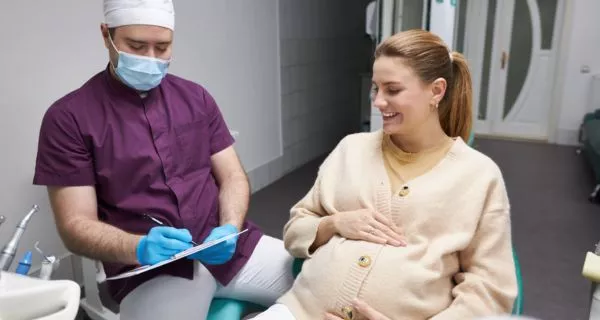
  • Before pregnancy: If you’re planning to become pregnant, schedule a dental checkup to address any cavities, infections, or gum issues beforehand.
  • During pregnancy: Don’t wait until something hurts. Delaying treatment may result in more complex problems. Routine cleanings, fillings, and even emergency procedures like root canals can be safe during pregnancy.

If you notice any of the following, call your dentist right away:

  • Bleeding gums when brushing or flossing
  • Gum swelling, redness, or tenderness
  • Tooth sensitivity or pain
  • Loose teeth

Take care of your smile and your baby’s future smile

Children of mothers who have high levels of untreated cavities or tooth loss are more than 3 times as likely to have cavities. Taking care of your mouth during pregnancy is one of the best gifts you can give your child’s future health.

At Channel Islands Family Dental, we care for expecting mothers across Ventura County, in Oxnard, Ventura, Port Hueneme, Newbury Park, and Santa Paula. We accept most major dental insurance plans, including Medi-Cal and Denti-Cal.

📞 Call us at (805) 985-6966 or book your appointment online.

This article is for informational purposes only. Please consult your dentist for personalized care during pregnancy.
FAQs

Pregnancy alone does not cause tooth loss. What raises the risk is untreated gingivitis, cavities made worse by morning sickness, and changes in diet and hygiene during pregnancy. With consistent care and regular dental visits, most pregnant women keep all their teeth healthy.

Yes, it is completely safe. Regular and emergency dental care, including the use of local anesthetics and radiographs, is safe at any stage during pregnancy. Avoiding the dentist out of fear can actually lead to worse problems for both mother and baby.

Pregnancy gingivitis is inflammation of the gums caused by hormonal changes. Signs include red, swollen, or bleeding gums, especially when you brush or floss. It affects up to 75% of pregnant women and is treatable. See your dentist at Channel Islands Family Dental in Oxnard, Ventura, or Port Hueneme if you notice these symptoms.

No. Women should not brush their teeth immediately after vomiting because the acid softens enamel and brushing right away can cause more damage. Rinse with water or a baking soda solution first, then brush after 30 minutes.

Periodontitis has been associated with poor pregnancy outcomes, including preterm birth and low birth weight. This is one more important reason to take your oral health seriously throughout pregnancy, it’s not just about your teeth.

Voice and Search Snippets (Q&A)

Will I lose my teeth if I'm pregnant?
No, pregnancy does not automatically cause tooth loss. But it does raise your risk for gingivitis and cavities. The key is to brush twice a day, floss daily, avoid sugary snacks, and visit your dentist regularly. Tooth loss during pregnancy is preventable with good care.
Is the dentist safe when you're pregnant?
Yes, dental care is completely safe during pregnancy. The American Dental Association confirms that cleanings, fillings, X-rays with proper shielding, and even emergency treatments like root canals can be safely done at any stage of pregnancy. Don't put off dental care, untreated problems can get worse.
What happens to your gums when you're pregnant?
Hormonal changes during pregnancy make your gums more prone to inflammation. This is called pregnancy gingivitis, and it affects up to 75% of pregnant women. Symptoms include red, swollen, or bleeding gums. If left untreated, it can lead to gum disease and tooth loss, so regular dental checkups during pregnancy are important.

References

1. Adamska, P., Sobczak, Z. H., Gromek, Z., Wojciechowska, B., Doroszkiewicz, P., Chmielewski, M., Cichońska, D., Zedler, A., & Pilloni, A. (2025). The impact of oral health and dental care on pregnancy: A Cross-Sectional Study among women of Reproductive age. Journal of Clinical Medicine, 14(14), 5153. https://doi.org/10.3390/jcm14145153

2. CDC. (2024, May 15). Talking to Pregnant Women about Oral Health. Oral Health. https://www.cdc.gov/oral-health/hcp/conversation-tips/talking-to-pregnant-women-about-oral-health.html

3. Cleveland Clinic. (2024, March 7). What do your hormones have to do with your oral health? Cleveland Clinic. https://health.clevelandclinic.org/hormones-and-oral-health

4. MouthHealthy. (n.d.). Pregnancy dental concerns. Oral Health Information From the ADA. https://www.mouthhealthy.org/life-stages/pregnancy/pregnancy-dental-concerns

5. Yenen, Z., & Ataçağ, T. (2019). Oral care in pregnancy. Journal of the Turkish-German Gynecological Association, 20(4), 264–268. https://doi.org/10.4274/jtgga.galenos.2018.2018.0139

Our Latest Articles

Brush Teeth Before or After Breakfast? Dentist guide
02Mar

Brush Teeth Before or After Breakfast? Dentist guide

Last Updated on: 14th March 2026, 08:30 am Most dentists recommend brushing before breakfast. This helps remove the bacteria that build up overnight and protects your teeth from acids in…

Salty Taste in Your Mouth? Symptoms & When to See a Dentist
25Feb

Salty Taste in Your Mouth? Symptoms & When to See…

Last Updated on: 26th February 2026, 07:51 am A salty taste in the mouth is usually caused by dry mouth, dehydration, postnasal drip, gum disease, acid reflux, or certain medications.…

How Can You Have a Kissable Breath for Valentine’s Day?
30Jan

How Can You Have a Kissable Breath for Valentine’s Day?

Last Updated on: 3rd February 2026, 06:46 am To enjoy kissable breath this Valentine’s Day, brush and floss daily, clean your tongue, and use antibacterial mouthwash. Stay hydrated, limit foods…

CI-Logo

Make a quick appointment!

BETTER LIFE THROUGH BETTER DENTISTRY

Skip to content