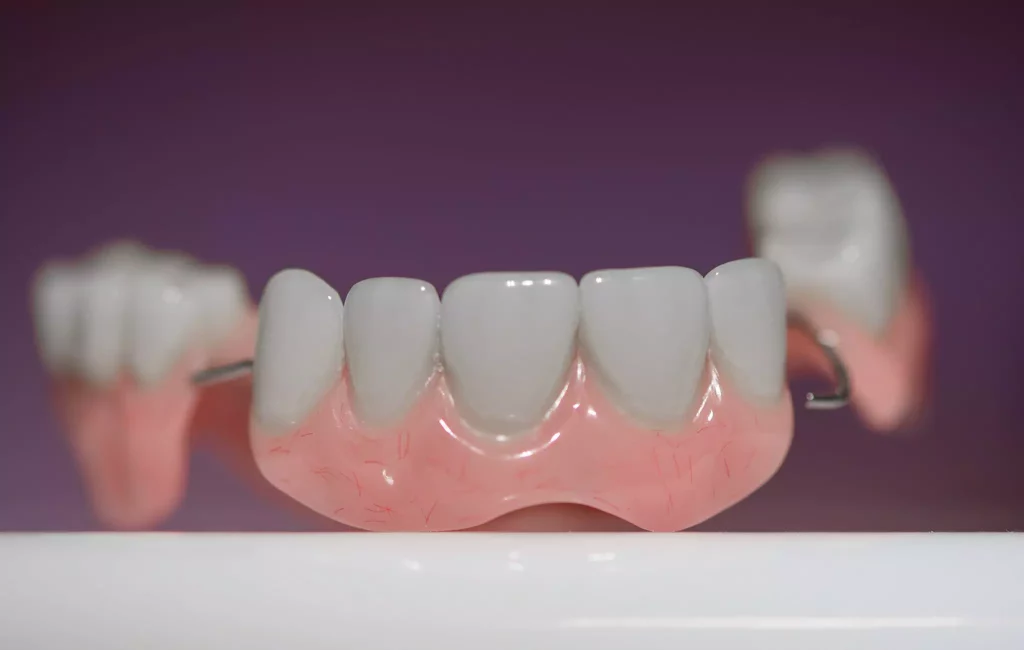
Today, with advances in science and technology, dental crowns are more sophisticated in terms of their properties such as resistance, toughness, texture, shine, opacity, adaptability, durability and mimicry with the remaining biological structures; making the prognosis of dental rehabilitation treatment more encouraging in many cases. However, it should be noted that all prosthetic treatment always goes hand in hand with the operator’s expertise, to make a precise diagnosis and to indicate this or that rehabilitative treatment. The different dental crowns that are offered in clinics vary according to the place, culture, education, but especially the purchasing power of the patients.
A dental crown is a tooth-shaped “cap” that is placed over a tooth covering it to restore its shape and size, strength, and/or to improve its appearance. The crown fully encases the entire visible portion of a tooth that lies at and above the gum line.
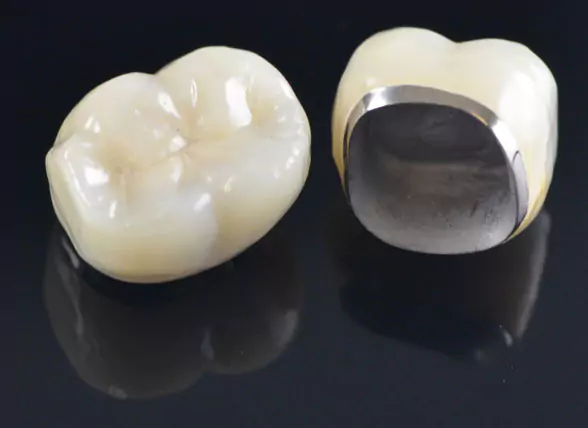
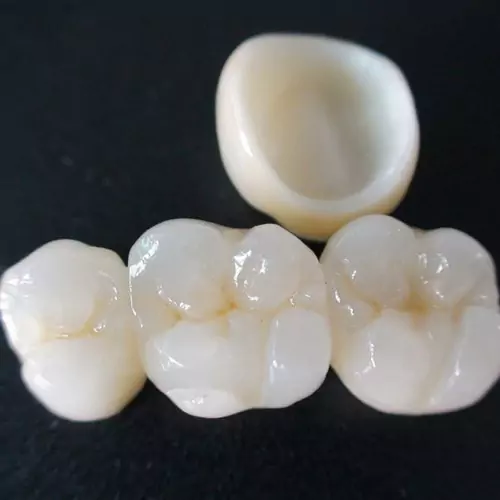
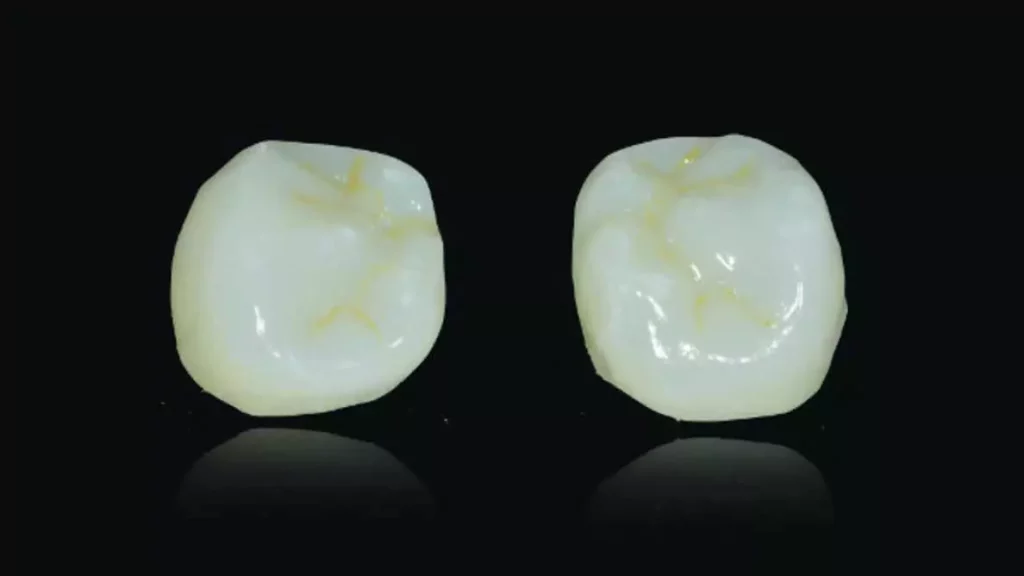
Crowns are custom made to fit over each tooth. They can be made of a variety of different materials, including ceramics, porcelain-and-metal, gold, or resin.
WHICH CROWN MATERIAL SHOULD I CHOOSE?
In order to recommend you which materials are the best, your dentist will first consider factors such as:
- Tooth’s location.
- How much of the tooth will show when you smile.
- Position of your gum tissue.
- Function of the tooth that needs the crown.
- How much natural tooth is remaining.
- Color of the surrounding teeth.
HOW DO I KNOW IF I NEED A CROWN?
If you have a large cavity that’s too big for a filling, it may be time for a crown. You may also need a crown if your tooth is: severely worn down, cracked or weakened. Crowns are also recommended following a root canal on a tooth because the tooth is more fragile and needs protection.
You may be a candidate for a crown if you’re missing a tooth, and the dentist needs to put in a dental bridge or a tooth implant.