Last Updated on: 8th May 2026, 11:41 am
There’s nothing quite like the bond that happens during breastfeeding. That quiet moment between you and your baby, knowing you’re providing everything they need, it’s one of the most powerful experiences of motherhood. But between the night feedings, the exhaustion, and the endless to-do lists, something often gets forgotten: your own oral health.
At Channel Islands Family Dental, we see nursing moms every day at our offices in Ventura, Oxnard, Port Hueneme, Newbury Park, and Santa Paula, and one of the most common things we hear is, “I’ve been meaning to come in, but I just haven’t had the time.”
This article is for you. Because taking care of your smile is part of taking care of yourself, and you deserve that too.
What is breastfeeding, and how long does it last?

Breastfeeding is the natural process of feeding an infant with milk produced by the mother’s mammary glands. It delivers essential antibodies, nutrients, and hormones that support a baby’s immune system, brain development, and healthy growth.
- The American Academy of Pediatrics (AAP) recommends exclusive breastfeeding for the first 6 months of life, with continued breastfeeding alongside solid foods through at least the first year.
- The World Health Organization (WHO) encourages breastfeeding for up to 2 years or beyond, for as long as both mother and child desire.
In practice, every family’s journey looks different. Some moms breastfeed for a few weeks; others for two or more years. What matters most is that both mother and baby are thriving, and that mom is getting the care she needs along the way.
How does breastfeeding affect your oral health?
This is the question most new moms don’t think to ask, until something starts to feel off. The truth is that breastfeeding involves real physiological changes in your body, and several of them directly affect your teeth and gums. Here’s what’s happening:
Calcium and bone density changes
When you breastfeed, your baby draws calcium from your body to build strong bones and teeth.
- According to the National Institutes of Health (NIH), some mothers experience a temporary bone density decrease of 3–7% during lactation.
- While this typically recovers after weaning, in the meantime it can make your teeth and the supporting bone structure more vulnerable.
If you’re not consuming enough calcium, your gums and jawbone can begin to weaken over time.
Hormonal fluctuations and gum sensitivity
Your estrogen and progesterone levels shift dramatically during and after pregnancy.
- These hormonal changes can cause your gums to become more sensitive, inflamed, and prone to bleeding, a condition known as pregnancy gingivitis that can persist during the breastfeeding period.
- Increased blood flow to the gums makes them react more intensely to bacteria and plaque, so even a small buildup can cause noticeable irritation.
Dry mouth
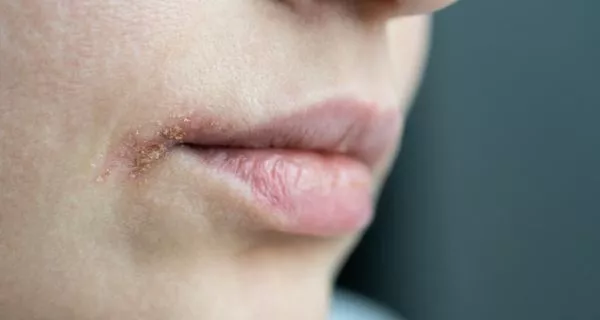
Breastfeeding is dehydrating. Your body is producing milk around the clock, and if you’re not drinking enough water, you may experience dry mouth, a condition where saliva production decreases.
Saliva is your mouth’s natural defense system:
- it washes away bacteria
- neutralizes acids
- keeps your enamel strong.
Without enough of it, your risk of cavities and gum disease goes up significantly.
Teeth grinding (bruxism)
New motherhood is stressful, and your jaw knows it.
- The American Dental Association notes that neck and shoulder tension from breastfeeding positions, combined with postpartum stress and broken sleep, can cause many nursing moms to grind or clench their teeth, often without realizing it.
- Over time, bruxism can cause tooth sensitivity, enamel wear, jaw pain, and even cracked teeth.
Neglected oral hygiene
This one is more common than you’d think. When you’re up every two hours and running on no sleep, brushing your teeth for a full two minutes can feel like a luxury.
- Many moms admit to skipping flossing or brushing only once a day during those early weeks.
- Unfortunately, even a short break from good hygiene habits can quickly lead to plaque buildup, cavities, and gum disease.
Signs your oral health needs attention right now
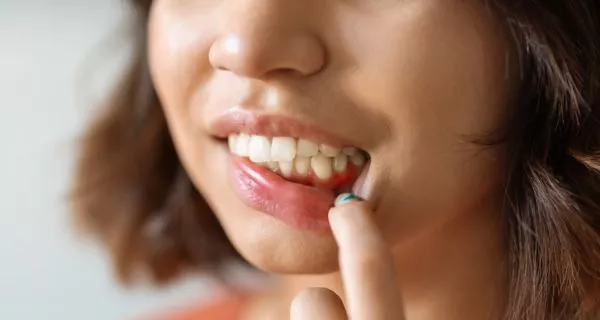
Don’t wait until something hurts. These are the signals your mouth is sending you:
- Bleeding when you brush or floss, even occasionally
- Teeth that feel more sensitive to hot, cold, or sweet foods than before
- Gums that look redder or more swollen than usual
- Persistent dry mouth or an unusual taste in your mouth
- A jaw that aches when you wake up, or a clicking sound when you open your mouth
- Loose-feeling teeth or a noticeable change in your bite
- It’s been more than 6 months since your last dental visit
How Channel Islands Family Dental can help nursing moms
At Channel Islands Family Dental, we understand that life with a new baby is full and demanding. That’s exactly why we make it easy for nursing moms to get the care they need, at any of our convenient Ventura County locations.
Here’s how we can support you during this special time:
- Routine cleanings and exams: A professional cleaning every 6 months removes the buildup that brushing alone can’t reach, and your dentist can catch early warning signs before they become bigger problems.
- Periodontal (gum disease) treatment: If hormonal changes have left your gums inflamed or bleeding, we offer deep cleaning and scaling treatments to restore gum health.
- Night guards for bruxism: Custom-fitted guards to protect your teeth from grinding and relieve TMJ tension, common in stressed, sleep-deprived new moms.
- Fillings and restorative care: If the calcium dip has led to early cavities, we’ll treat them quickly and comfortably using techniques and materials safe for nursing mothers.
- Fluoride treatments: A simple, safe application that strengthens enamel and helps prevent sensitivity, especially helpful when your enamel may be more vulnerable.
What does a typical appointment look like?
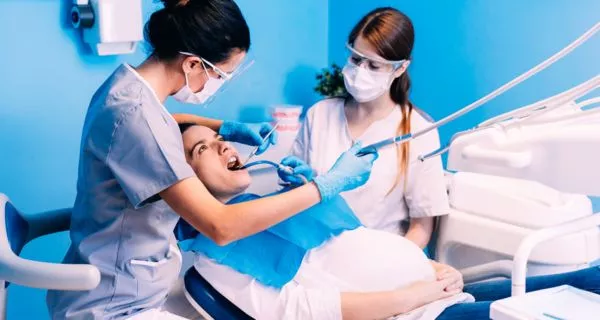
We know your time is precious. Here’s what to expect when you visit us:
- You arrive and let our team know you’re currently breastfeeding, we’ll note it in your chart and adjust your care plan as needed.
- We take a brief health history update and discuss any changes or concerns you’ve noticed since your last visit.
- Your hygienist performs a gentle professional cleaning, removing plaque and tartar that have built up since your last appointment.
- Your dentist conducts a full oral exam, checking your teeth, gums, bite, jaw, and any areas of sensitivity or concern.
- If X-rays are needed, a protective lead apron is used and the process takes just a few minutes.
- We wrap up with personalized recommendations, product suggestions, and a follow-up plan that fits your schedule.
You give everything to your baby, give yourself this too
Motherhood is the most selfless thing a person can do. You feed your baby before you eat. You sleep last. You worry first. But here’s something a wise dentist once said that has stayed with us: “Put your oxygen mask on first.”
Your health matters, not just for you, but for your baby too. A healthy mouth means healthier milk, a lower risk of passing cavity-causing bacteria to your child, and a mom who feels a little more like herself again.
You are not just a feeding machine. You are a whole person, and you deserve care. Let us be part of your village.