Last Updated on: 26th February 2026, 07:51 am
Have you noticed a salty taste in your mouth even when you haven’t eaten anything salty?
It happens more often than you’d think, and patients across Ventura County bring it up with us regularly. Sometimes it’s nothing serious, but other times it’s your body’s way of telling you something’s off. Either way, it’s worth paying attention to.
What does a salty taste in your mouth actually mean?
The medical term for any change in how things taste is dysgeusia, a condition where your taste perception is altered or distorted.
- Your sense of taste depends on a delicate system: taste buds on your tongue send signals through cranial nerves to your brain, and saliva plays a key role in activating those taste receptors.
- When something disrupts saliva production, composition, or the nerves involved, your brain may start interpreting sensations as salty, even when you haven’t eaten a single chip.
Identifying the cause is often the first step toward relief.
What are the most common causes of a salty taste in your mouth?
Several different things can trigger this sensation, some dental, some medical, some as simple as not drinking enough water. Here are the most common ones.
Could dry mouth be the reason?

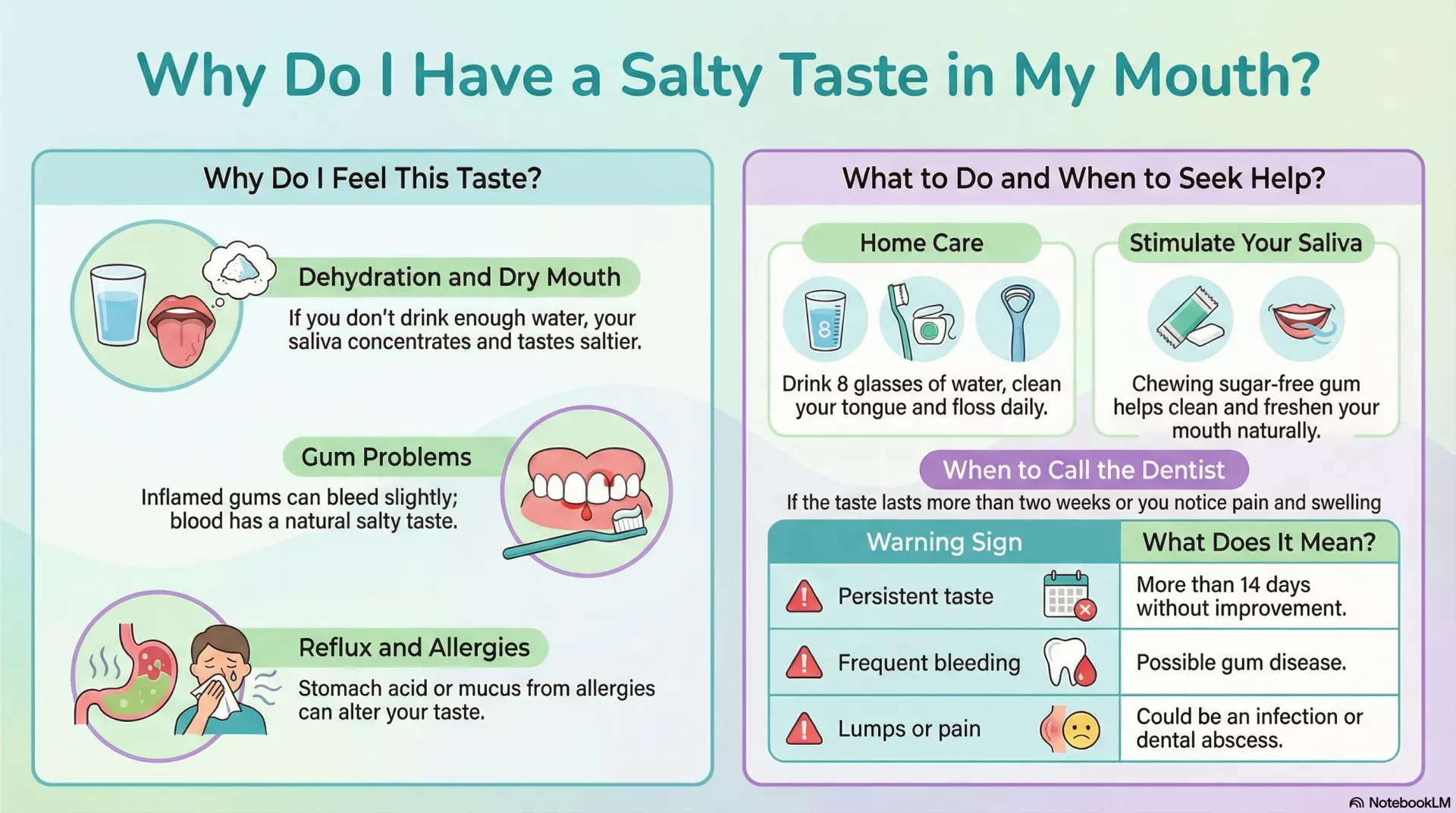
Dry mouth (xerostomia) is one of the most frequent culprits. When your salivary glands don’t produce enough saliva, the mineral concentration in your mouth shifts, and that can create a salty or metallic taste. Common triggers include:
- Aging
- Tobacco use
- Diabetes or autoimmune conditions
- Radiation therapy
- Certain medications
You might also notice sticky or thick saliva, bad breath and a higher rate of cavities, so it’s worth addressing with your dentist.
Is dehydration making your mouth taste salty?
This is one of the simplest, and most overlooked, causes. When you’re not drinking enough water, minerals in your saliva become more concentrated and your taste buds notice. Other signs to watch for:
- Dark yellow urine
- Fatigue or dizziness
- Unusual thirst
- Dry lips or throat
Drinking enough water throughout the day, typically 6 to 8 glasses, can make a significant difference.
Could gum disease or oral bleeding be the culprit?

Blood has a naturally salty, metallic flavor, and your taste buds can detect even small amounts. If your gums bleed when you brush or floss, that may be exactly what you’re tasting. This can be caused by:
- Gingivitis (early gum disease)
- Periodontitis (advanced gum disease)
- Brushing too aggressively
- Oral infections or abscesses
If you notice blood regularly, don’t ignore it; bleeding gums are an early warning sign, and the sooner it’s treated, the easier it is to manage.
Is postnasal drip or allergies causing that taste?
When you’re congested, excess mucus drips down the back of your throat and into your mouth. That mucus contains minerals that change how things taste. Look for these clues:
- Stuffy or runny nose
- Frequent throat clearing
- Scratchy throat
- Reduced sense of smell
This is especially common during allergy season here in Southern California.
Could acid reflux be affecting your mouth?
Gastroesophageal reflux disease (GERD) occurs when stomach acid travels back up into the esophagus, and sometimes all the way into the mouth. Along with the more familiar heartburn, GERD can cause:
- A sour or salty taste
- Chronic cough
- A sensation of something stuck in the throat
If left untreated, acid reflux can damage tooth enamel over time, which is why your dentist may be the first to notice signs of GERD.
Are your medications changing how things taste?

More than 250 medications are known to affect taste or saliva production. Some of the most common include:
- Antibiotics
- Antidepressants
- Antihistamines
- Diuretics (water pills)
- Chemotherapy drugs
If you recently started a new medication and noticed a change in taste, talk to your prescribing doctor, there may be alternatives available.
Can nutritional deficiencies cause a salty taste in your mouth?
Yes, they can. Deficiencies in certain nutrients impair how your taste buds function, leading to altered or persistent taste sensations. The most commonly linked deficiencies are:
- Zinc: Essential for taste bud health; even mild deficiency can distort taste
- Vitamin B12: Supports nerve function involved in taste signaling
- Iron: Low levels are associated with dysgeusia and a metallic or salty perception
A simple blood test ordered by your doctor can identify whether nutritional deficiencies are playing a role.
What can you do at home to relieve a salty taste in your mouth?

If the taste is mild and you haven’t noticed any other concerning symptoms, these strategies can help:
- Stay hydrated: Drink at least 6–8 glasses of water per day
- Brush and floss consistently: Twice-daily brushing and daily flossing reduce bacteria and keep gum tissue healthy
- Use an alcohol-free mouthwash: Alcohol-based rinses can worsen dry mouth
- Chew sugar-free gum: This stimulates saliva production naturally
- Cut back on alcohol and tobacco: Both contribute to dry mouth and alter taste
- Avoid very salty, spicy, or greasy foods: These can aggravate the sensation temporarily
- Rinse with warm salt water: Gentle and soothing if gum irritation is a factor
When should you see a dentist about a salty taste in your mouth?
Some cases of salty taste resolve on their own, but it’s time to make an appointment if:
- The taste has lasted more than two weeks
- You notice bleeding gums regularly
- You have swelling in the neck, jaw, or salivary glands
- It’s accompanied by difficulty chewing or swallowing
- You have an existing condition like diabetes, kidney disease, or an autoimmune disorder
- You’re experiencing unexplained weight loss alongside the taste change
Our teams at Channel Islands Family Dental Office in Port Hueneme, Oxnard, Ventura, Newbury Park, and Santa Paula, are here to help you figure out whether your symptoms are dental, medical, or both. We’ll take a thorough look and connect you with the right care.
How can Channel Islands Family Dental Office help you?
That salty taste you keep ignoring? It might be nothing. But it also might be your mouth trying to tell you something. At Channel Islands Family Dental Office, we’re used to being the first ones to connect the dots, and we’re happy to do exactly that for you.
No matter where you are in Ventura County, we have an office near you. Book an appointment in one of our clinics in Port Hueneme, Oxnard, Ventura, Newbury Park or Santa Paula and let’s figure it out together.
Note: This article is for informational purposes only and does not substitute professional dental or medical advice. If you have concerns about your oral health, please contact Channel Islands Family Dental Office to schedule a consultation.