Last Updated on: 22nd May 2026, 09:47 am
Ventura County is home to Naval Base Ventura County (NBVC), one of the largest employers in the region with more than 19,000 personnel across Port Hueneme, Point Mugu, and San Nicolas Island.
Many active-duty members, veterans, and their families live in the surrounding cities of Port Hueneme, Oxnard, Ventura, Newbury Park, and Santa Paula. That means a meaningful number of our neighbors live with post-traumatic stress disorder (PTSD), and PTSD has a real, measurable impact on the mouth.
In this guide we’ll walk you through how PTSD shows up in your dental health, what you can do at home, and when it’s time to see a dentist.
How PTSD shows up in your mouth
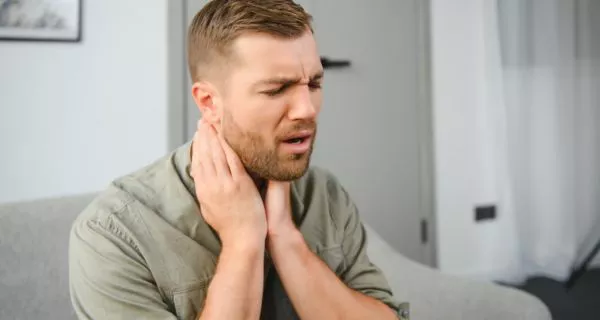
PTSD keeps the body in a state of “high alert.” Over time, that constant stress, plus side effects of common medications, can quietly damage your teeth and gums.
Research consistently shows that veterans are about 60% more likely to experience tooth decay and 42% more likely to report gum disease than non-veterans. Here are the most common patterns we see in the chair.
Teeth grinding (bruxism)
People with PTSD often tightly clench or grind their teeth, especially during sleep.
- The U.S. Department of Veterans Affairs (VA) officially recognizes this link, noting that PTSD patients tend to grind significantly more than the general population.
- If left untreated, this constant pressure can wear down your enamel, crack your teeth, and trigger severe jaw pain or headaches.
Dry mouth (xerostomia) from medication
Many everyday medications prescribed for PTSD reduce the flow of saliva.
- Common antidepressants list dry mouth as a side effect for more than 1 in 5 patients.
- Without enough saliva, your mouth loses its natural defense system to wash away bacteria, leading to a much higher risk of cavities and gum infections.
Gum disease and tooth loss
Chronic stress keeps your body’s stress hormones high, which weakens your immune system and makes your gums much more vulnerable to infection. When you mix that with dry mouth and avoiding the dentist, many veterans end up dealing with serious gum issues earlier in life than their peers.
Dental anxiety and avoidance
For many people, the sounds, smells, or physical sensations of a dental office can trigger intense anxiety or flashbacks.
Skipping a cleaning feels like the easiest way to feel safe at the moment, but it means tiny, easily fixable problems can quickly turn into major, painful ones.
What can you do at home?
Small and simple steps can protect your teeth, even on your hardest days:
- Keep it simple: Brush twice a day with fluoride toothpaste and floss once a day. A short, predictable routine is much easier to stick with when you are overwhelmed.
- Sip water frequently: Plain water rinses away bacteria and directly relieves dry mouth comfort. Try to avoid sugary or acidic drinks throughout the day.
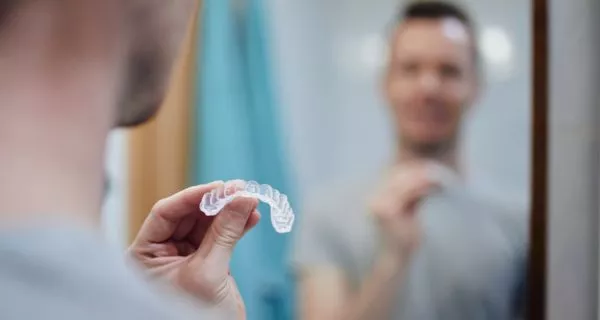
- Use a custom night guard: A guard made by your dentist protects your teeth from fracturing or wearing down while you sleep.
- Try sugar-free gum or mints with xylitol: These stimulate saliva flow naturally and help prevent cavities.
- Look for dry-mouth products: Alcohol-free rinses and over-the-counter saliva substitutes can make your mouth feel much more comfortable.
- Switch to a soft-bristled brush: It is much gentler on sensitive teeth and inflamed, bleeding gums.
⚠️ Important Safety Note: Never stop taking or alter your PTSD medication on your own to fix dental side effects. Always talk to the doctor who prescribed your medication and your dentist so they can work together on a safe solution.
Calming the nervous system helps your mouth
Lowering overall body stress directly reduces the physical tension that drives jaw clenching and tooth damage. Try practicing these for a few minutes a day:
- Diaphragmatic (“belly”) breathing before bed (deep and slow)
- Progressive muscle relaxation to release jaw and shoulder tightness
- Mindfulness practice or meditation for a few minutes a day
- Regular movement: walking, swimming, or yoga most days of the week
When should you see a dentist?
Listen to your body. Schedule a visit if you notice any of these warning signs:
- Jaw soreness, clicking, or waking up with headaches.
- Teeth that look worn down, flat, or chipped at the front.
- A persistent dry mouth or a burning feeling on your tongue.
- Bleeding, swollen, or receding gums.
- Tooth sensitivity to hot or cold that doesn’t go away.
- It has been more than six months since your last professional cleaning.
Navigating your coverage: If you are unsure whether your TRICARE or United Concordia plan covers a custom night guard for grinding, deep cleanings, or specific procedures, simply call us before your visit. Our team will verify your benefits at no cost to you.
If you don’t have insurance, we also offer affordable payment plans and a $29.99 New Patient Special to ensure you get the care you deserve.
Get the care you deserve

If you are a veteran, an active-duty service member, or a family member living with PTSD, you do not have to navigate your dental care alone. Channel Islands Family Dental Office is here to provide professional, gentle, and zero-pressure care across all five of our Ventura County locations.
Find your nearest Channel Islands Family Dental office:
- Ventura, CA 93003 — 5700 Ralston St, # 203 · 📞 (805) 465-9414 · venturadentist.net
- Oxnard, CA 93036 — 2379 N Oxnard Blvd · 📞 (805) 342-1100 · oxnarddentist.com
- Port Hueneme, CA 93041 — 2601 N Ventura Rd (closest to NBVC) · 📞 (805) 985-6966 · porthuenemedentist.com
- Santa Paula, CA 93060 — 248 W Harvard Blvd Suite B · 📞 (805) 525-1573 · santapauladentists.com
- Newbury Park / Thousand Oaks, CA 91320 — 1620 Newbury Rd Suite 5 · 📞 (805) 372-2321 · newburyparkdentist.net
This article is for informational purposes only and is not a substitute for personalized medical or dental advice. Please consult your dentist and your prescribing doctor about any concerns related to PTSD and your oral health.