Last Updated on: 24th September 2026, 11:27 am
If your child has ever complained that a tooth “only hurts when I eat ice cream” — or if a routine checkup turned up a cavity deeper than you expected — you may have already heard the word pulpotomy from your dentist. It’s a common, low-risk procedure, but the name alone can sound intimidating to a worried parent.
Here’s what it actually involves, how to recognize the warning signs early, and what families across Ventura County — from Oxnard to Santa Paula — can expect if their child needs one.
Why Cavities Reach the Pulp So Often in Kids
Tooth decay moves fast in young mouths. According to the National Institute of Dental and Craniofacial Research (NIDCR), roughly 42% of children ages 2 to 11 have had a cavity in a baby tooth, often because young children haven’t yet developed the fine motor skills to brush thoroughly on their own, combined with frequent snacking on sugary foods and drinks.
Left untreated, a cavity can advance past the enamel and dentin and reach the pulp, the innermost layer of the tooth that holds its nerves and blood vessels.
Signs Your Child May Have Pulpitis
Pulpitis is the medical term for inflammation of the pulp. It shows up in two forms, and the difference matters for treatment:
- Reversible pulpitis: Brief, mild pain when eating something cold, like ice cream, or occasionally something hot. The discomfort fades quickly once the trigger is removed.
- Irreversible pulpitis: Pain that comes on its own, lingers, and doesn’t respond well to over-the-counter pain relievers.
A dental X-ray is the only reliable way to confirm how deep the decay goes and which treatment fits best. The right choice also depends on your child’s age, whether the tooth can be restored, and whether a permanent tooth is waiting underneath.
Two Paths for an Inflamed Pulp
- Indirect pulp capping: used when decay is close to the pulp but hasn’t reached it yet. Your dentist places a protective medicated material that calms inflammation, slows further decay, and gives the tooth a chance to heal on its own.
- Pulpotomy: the next step when decay has already reached the pulp and capping alone won’t be enough.
Both treatments are typically followed by a restoration — usually a filling or a crown — to seal and protect the tooth long-term.
What Happens During a Pulpotomy

A pulpotomy is done in one visit and is far less involved than adults often assume:
- The tooth is numbed with local anesthesia so your child stays comfortable.
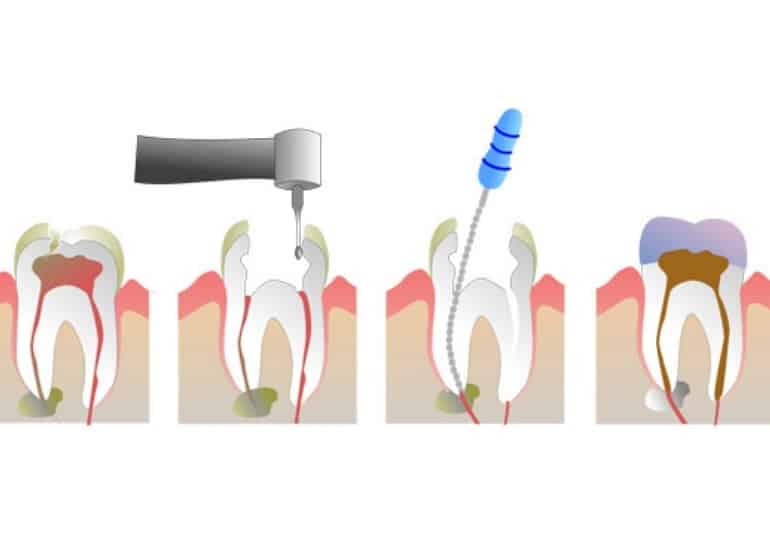
- The dentist cleans out decay and removes only the infected portion of the pulp, the healthy pulp in the root canals is left intact.
- The remaining chamber is disinfected and filled with a protective medicated material.
- The tooth is sealed and restored, most often with a crown, to keep bacteria out and restore normal chewing function and appearance.
Mild soreness or swelling for a day or two afterward is normal, and your dentist may recommend an age-appropriate pain reliever. Follow-up visits let your dentist confirm the tooth and restoration are healing as expected.
Can Adults Get a Pulpotomy Too?
Yes, the technique is the same, but it’s used far less often in adults. Because adult teeth have a lower capacity to heal, most dentists recommend a full root canal treatment or extraction for permanent teeth once decay has reached the pulp.
Pulpotomies remain most effective — and most commonly recommended — for baby teeth and young permanent teeth still developing their roots.
When a Pulpotomy Isn’t the Right Fit
Your dentist may recommend a different treatment if:
- The pulpitis is irreversible: a root canal treatment or extraction is usually needed instead.
- Pain is spontaneous and doesn’t ease with medication, either before or after treatment, this points to a pulpectomy or extraction.
- Bleeding won’t stop during the procedure, a sign the pulp damage is more extensive than expected.
- The patient is an older adult with a fully mature tooth, reduced healing capacity makes root canal treatment or extraction the more predictable option.
Protecting Your Child’s Next Tooth
A pulpotomy treats today’s problem, good habits prevent the next one. The American Academy of Pediatric Dentistry (AAPD) recommends:
- Brushing twice daily with fluoride toothpaste (a rice-grain amount for toddlers, pea-size for older kids)
- Limiting sugary snacks and drinks between meals
- Scheduling checkups every six months so small cavities are caught before they reach the pulp
It’s completely normal to feel nervous before your child’s procedure, but a pulpotomy is a routine, virtually risk-free treatment when performed by an experienced dentist. If you have questions, your dentist is the best person to walk you through exactly what to expect for your child’s specific tooth.
Pulpotomies at Our Five Ventura County Offices

Our dentists treat pulpitis and perform pulpotomies for kids at all five of our Ventura County offices:
- Oxnard: 2379 N Oxnard Blvd, Oxnard, CA 93036 — (805) 342-1100
- Ventura: 5700 Ralston St, Suite 203, Ventura, CA 93003 — (805) 465-9414
- Newbury Park: 1620 Newbury Rd, Suite 5, Newbury Park, CA 91320 — (805) 410-5151
- Port Hueneme: 2601 N Ventura Rd, Port Hueneme, CA 93041 — (805) 985-6966
- Santa Paula: 248 W Harvard Blvd, Suite B, Santa Paula, CA 93060 — (805) 985-6966
New to our practice? Take advantage of our $99 New Patient Special, which includes the exam and X-rays needed to catch a deep cavity before it turns into a dental emergency. We accept most major dental insurance plans.
Book online or call your nearest office today, same-week appointments are usually available for tooth pain.
This article is for informational purposes only. Please consult your dentist for personalized care regarding your child’s specific dental needs.